
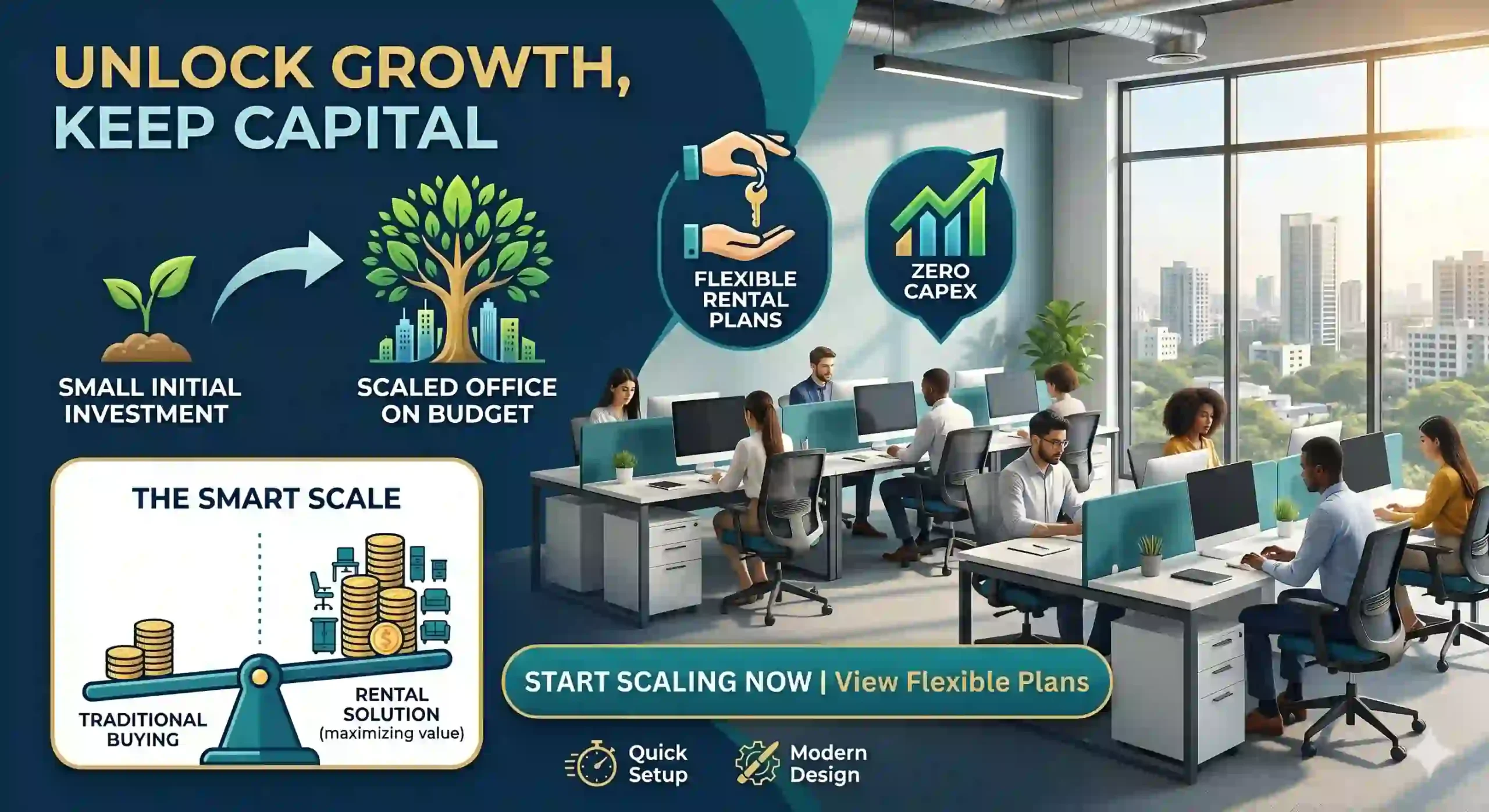
How Startups Can Scale Office Setup Without Huge Investment Using Rental Furniture
Setting Up an Office Is Harder Than It Looks
Ask any startup founder what surprised them most in their early months, and office setup costs will almost always come up. The focus going in is usually on product, hiring, and customers. Then the reality of fitting out a physical office arrives, and it is expensive, time-consuming, and surprisingly permanent for a business that is still figuring out its shape.
Workstations, chairs, storage units, meeting room furniture, reception setups. Each item adds to a bill that can quickly climb into several lakhs before a single employee has sat down. For a startup operating on seed funding or early revenue, that kind of capital outlay is not just uncomfortable. It is genuinely risky.
The bigger problem is that office needs at the six-month mark often look nothing like they did on day one. A team of ten becomes twenty. A department gets restructured. A new city office opens. A funding round falls through and the headcount shrinks. Traditional office furniture, once purchased, offers no flexibility for any of these scenarios.
This is why office furniture rental is gaining real traction among startups across India, particularly in cities like Pune, Bengaluru, and Hyderabad where office spaces are expensive and business conditions change fast.
Why Buying Office Furniture Upfront Does Not Work for Startups
Capital Gets Locked In Immediately
When a startup buys office furniture outright, a significant chunk of working capital gets converted into a depreciating physical asset. That money cannot be redeployed toward hiring, marketing, product development, or operations. For early-stage businesses where every rupee of working capital matters, this is a real constraint that limits flexibility across the board.
Scaling Becomes a Logistics Problem
Startups that buy furniture for their initial team size quickly find themselves either short on workstations when the team grows, or sitting on excess furniture they do not need when plans change. Neither situation is efficient. Adding more purchased furniture means another capital outlay. Getting rid of existing furniture means taking a significant loss on resale value, since office furniture depreciates quickly and secondhand demand is unpredictable.
Downsizing Is Painful
Not every startup grows in a straight line. Pivots, funding delays, market shifts, and restructuring are common. A company that bought furniture for 40 people and now needs space for 20 is stuck with assets that are costly to store, difficult to sell, and impractical to move. Ownership becomes a liability at exactly the moment the business needs to be lean.
What Office Furniture Rental Actually Means
Office furniture rental is straightforward in concept. Instead of purchasing workstations, chairs, storage, and meeting room furniture outright, a business pays a monthly rental fee to use that furniture for an agreed period. The rental provider handles delivery, installation, and maintenance. When requirements change, the arrangement can be adjusted, scaled up, scaled down, or ended according to the terms of the agreement.
In India, the rental model for office furniture has moved well beyond startups and now serves established companies, co-working operators, project offices, and businesses setting up temporary hubs in new cities. But startups remain the segment that benefits most directly, because the model is built around exactly the kind of flexibility that early-stage businesses need.
The office setup cost in India for a traditionally furnished startup office can range from 50,000 to over 3 lakhs depending on team size, furniture quality, and city. Rental significantly reduces that initial barrier and converts a large one-time cost into a predictable monthly expense.
How Renting Office Furniture Helps Startups Grow Smarter
Pay as You Grow
The most practical advantage of furniture rental for a startup is that costs align with the actual size and stage of the business. A founding team of eight pays for eight workstations. When the team reaches twenty, the rental is adjusted to cover twenty. There is no need to forecast six months ahead and purchase accordingly. Capital is freed up to support the growth that is actually happening rather than being tied up in furniture purchased in anticipation of growth that may or may not materialise on schedule.
Upgrades Without Write-Offs
As a startup matures, its office needs become more refined. Early-stage offices often prioritise function over form. A Series A company presenting to clients and investors needs a space that reflects its position. With rental furniture, upgrading from basic workstations to a more professional setup does not require writing off purchased assets. The provider swaps out the furniture, and the business moves forward without the logistical and financial friction of a full refit.
Maintenance Is Not Your Problem
Furniture maintenance is an invisible cost that businesses routinely underestimate when buying. Chair mechanisms wear out. Desk surfaces get damaged. Storage unit hinges break. When furniture is owned, repair and replacement costs fall on the business. With a rental arrangement, maintenance and replacements are typically the responsibility of the provider. This removes a recurring operational headache and ensures the office consistently looks and functions as it should.
Where Rental Furniture Makes the Most Sense
New startup offices setting up for the first time with a small team and uncertain growth trajectory. Rental allows the office to be functional and professional from day one without committing large capital to a setup that may need to change within months.
Expanding teams that are adding headcount faster than anticipated. New joinees can have workstations ready within days rather than weeks, since the rental provider handles procurement and installation.
Temporary or project-based offices set up for a specific client engagement, a product launch, or a time-limited project. Renting for the duration of the project and returning the furniture when it concludes is far more practical than purchasing and then dealing with surplus assets.
Remote team hubs in cities where the company does not yet have a permanent presence. A startup expanding from Pune to Mumbai or from Bengaluru to Delhi can set up a functional hub quickly using rental furniture without committing to a full office infrastructure investment in an untested location.
Buying vs Renting: What the Numbers Actually Look Like
Consider a startup setting up an office for 15 people in Pune. A basic but functional setup covering workstations, chairs, storage, and a small meeting room would cost between 1.5 and 2.5 lakhs if purchased outright. Add installation, any customisation, and the inevitable additional pieces missed in the initial estimate, and the figure climbs further.
The same setup through an office furniture rental arrangement in Pune might cost between 15,000 and 30,000 per month depending on furniture quality and rental terms. Over the first year, the total rental cost may approach or match the purchase cost. But the critical difference is cash flow timing and flexibility.
In the rental model, no large sum leaves the business at the start. The monthly cost is predictable and adjustable. If the team grows, costs scale up gradually. If the team shrinks, costs can be reduced. If the company closes a city office, the furniture goes back without any disposal problem.
Over three or more years in a stable setup, purchasing can become more cost-effective. But most startups do not operate in stable setups for that long. The flexibility premium that rental charges is, for most early-stage businesses, entirely worth paying.
The Furniture to Prioritise When Starting a Rental Setup
Workstations are the foundation. Prioritise sturdy, clean-lined desks with adequate surface area and cable management. This is not the place to cut corners since workstation quality directly affects daily productivity.
Ergonomic chairs matter more than most startups initially appreciate. Long hours at a poorly designed chair lead to physical fatigue and discomfort that reduces focus and increases sick days. Adjustable, well-supported seating is worth renting at a slightly higher tier.
Storage solutions including pedestals, filing cabinets, and shelving units keep the workspace organised and functional. In a rented office where space is often limited, vertical and modular storage is particularly valuable.
Meeting room furniture including a table and chairs suited to the room size allows the team to meet internally and host external guests professionally. A well-presented meeting room also matters for investor and client interactions, which are frequent in a startup environment.
Mistakes Startups Make When Setting Up Offices
Over-investing in furniture too early. Purchasing a premium setup before the team size, office location, and business model are stable is a common and costly mistake. The office that looks impressive at launch often needs to change significantly within the first year.
Assuming the current team size is permanent. Startups that buy furniture sized for their present team frequently face a scramble when new hires join quickly. Building in flexibility from the start, whether through rental or modular purchased furniture, avoids this problem.
Prioritising aesthetics over function. A good-looking office that lacks ergonomic seating, proper workstation spacing, and functional storage creates daily friction for the team. Function should lead. Aesthetics should follow from a functional foundation.
Not reading rental terms carefully. Not all rental agreements are equally flexible. Before signing, understand the notice period required to scale up or down, who bears responsibility for damage, what the exit terms look like, and whether there are penalties for early termination.
Your Office Should Support Your Growth, Not Limit It
The decision to rent rather than buy office furniture is, at its core, a decision to keep your options open. Startups operate in conditions of genuine uncertainty. The tools and systems that support them should reflect that reality rather than work against it.
Office furniture rental allows a startup to have a professional, comfortable, and fully functional workspace from day one while preserving the capital and flexibility needed to respond to whatever comes next. It converts a large, inflexible cost into a manageable, adjustable one.
If you are setting up a new startup office, expanding your team, or exploring a new city location, we can help you design and furnish a workspace that fits your current needs and scales with your plans.
[Get a Free Rental Quote for Your Office]
Frequently Asked Questions
What is the minimum rental period for office furniture in India?
Most office furniture rental providers in India offer a minimum rental period of six to twelve months. Shorter-term arrangements are available for temporary or project-based setups, though these typically come at a slightly higher monthly rate. It is worth discussing your expected duration upfront to get the most suitable pricing structure.
Is office furniture rental in Pune cost-effective compared to buying?
For startups and businesses with changing needs, rental is almost always more cost-effective in the short to medium term. It eliminates upfront capital outlay, removes maintenance costs, and allows you to scale up or down without financial loss. Buying becomes more economical only in stable, long-term setups where furniture requirements are unlikely to change.
What types of furniture can be rented for a startup office?
Most rental providers offer a full range including workstations, ergonomic chairs, storage units, reception furniture, meeting room tables and chairs, and soft seating for breakout areas. Many providers also offer bundled packages designed specifically for startup offices that cover all the essentials in a single arrangement.
How quickly can rented office furniture be delivered and installed?
Delivery and installation timelines vary by provider and city, but most established rental companies can complete delivery and setup within three to seven working days of order confirmation. For larger setups or custom configurations, allow slightly longer. This is still considerably faster than sourcing, purchasing, and arranging installation of purchased furniture independently.
Can we upgrade or add more furniture mid-rental if our team grows?
Yes, this is one of the primary advantages of renting over buying. Reputable rental providers allow mid-contract additions and upgrades, often with minimal notice. The rental amount is revised to reflect the additional items. This pay-as-you-grow flexibility is precisely why the rental model suits startups better than outright purchase.
